TW: Gun violence, war
I will never forget the chills down my spine when listening to a mother’s newfound promise to take better care of her children. She had been wrongfully incarcerated due to gun violence that she was actually the victim of. Her children were not sleeping at night, and they were struggling in school. The eldest sibling started crying when he was asked about class. “Stress was eating at their bodies,” the pediatrician explained.
I will never forget the immense sadness I shared with a junior in high school who had lost her brothers to gun violence when she was 9 years old. Now, she struggles with her self-esteem, bullying at school and immense dread whenever she hears any loud sound. Her mother is trying to keep it together for both of them, but I could tell that she was still mourning her lost children.
These devastating snippets are just a few among many more who have been harmed or lost to firearm conflict.
So, I commend the families that don’t want guns in their lives. But I worry when they dismiss gun violence as an afterthought, and think that if they don’t own one, it won’t touch their life or their loved ones…right? I desperately wish that were the case, but it isn’t, especially in a country where gun violence is one of the leading causes of death for American children. 5,151 children and teenagers were shot in 2024, and 1,403 of them died (Gun Violence Archive 2025). Some of these deaths came from the 219 incidents of school shootings (Everytown for Gun Safety). For perspective, the CDC tracked 47 pediatric deaths due to the influenza virus in 2024 (CDC Flu surveillance, 2024).
Furthermore, black children and teens are disproportionately affected by gun violence in the United States. A 14-year-old black male in Philadelphia has a one-in-eight chance of being shot or killed by a firearm before reaching his 25th birthday. In stark contrast, non-Hispanic white 14-year-old males face a one-in-100 chance of firearm injury or death by age 25. These risks are likely much higher in Philadelphia’s most segregated Black neighborhoods (10.1016/j.jadohealth.2024.05.021).
I hope this piece reminds people that this crisis demands attention and action. Each gunshot injury and death sends shockwaves through communities. The trauma ripples outward, reshaping family dynamics, disrupting education, and leaving psychological scars that can span generations. Moreover, these layers of pain and racially charged harm due to gun violence can impact the care marginalized families have access to and the care physicians can provide. To that, we must continue engaging with and educating ourselves on current events, policies, and harm reduction resources. Take the time to get to know our patients beyond their chief complaint and become their best advocate. Every listening ear and open heart mean the world to them, especially when their world is crumbling.
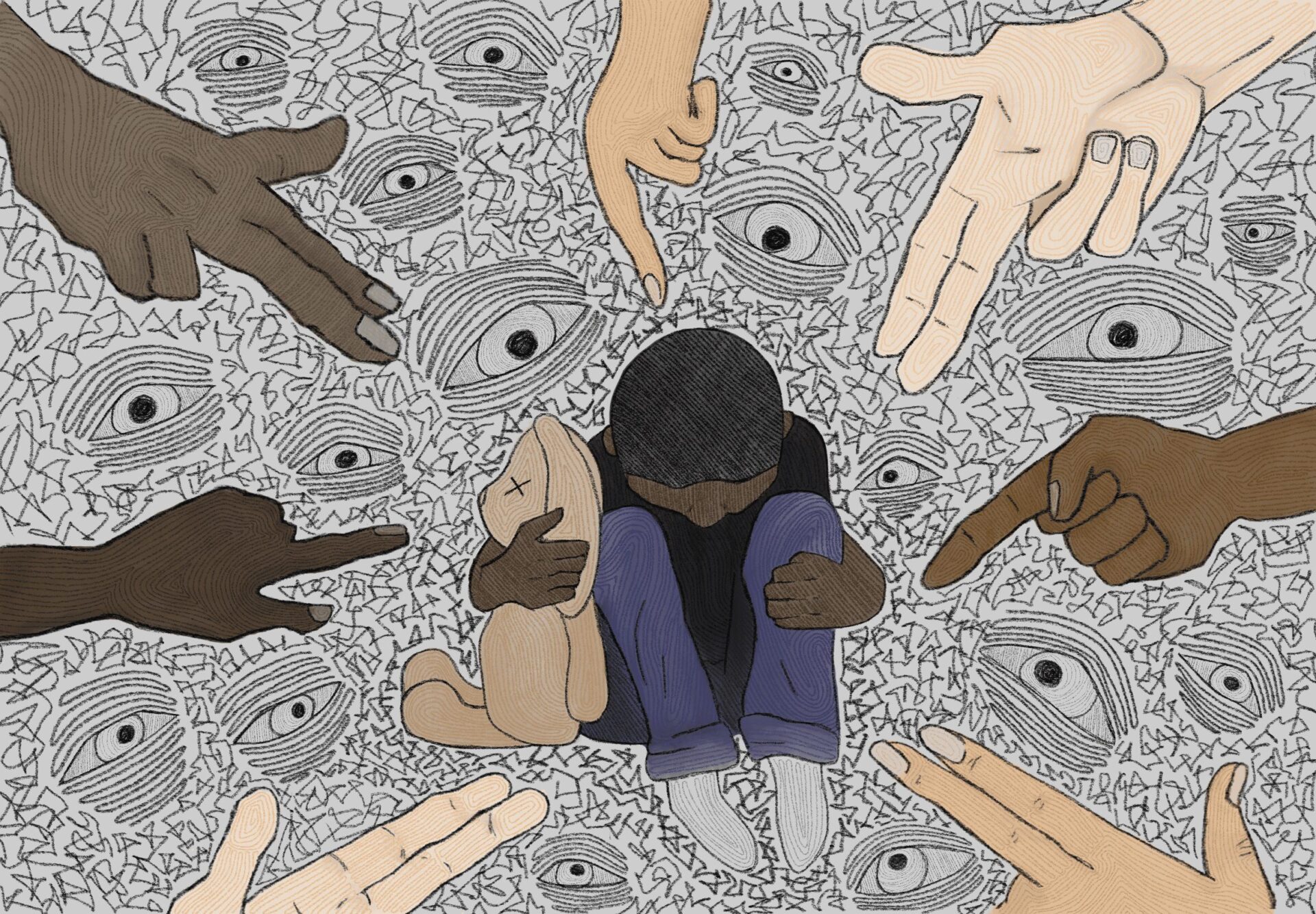
A bit more about the art piece:
- The finger guns represent how gun violence is a product of humanity, a concoction of hate, fear, and miscommunication.
- The pointing fingers represent the relentless bullies, the demanding and shaming parents and guardians and the way children are most often blamed or taken advantage of in society.
- The eyes represent how these atrocities are beyond Philadelphia. The consequences of gun violence have taken the world stage through the internet, and yet, nations and institutions still use human suffering as political leverage with no remorse.
Do not turn a blind eye.