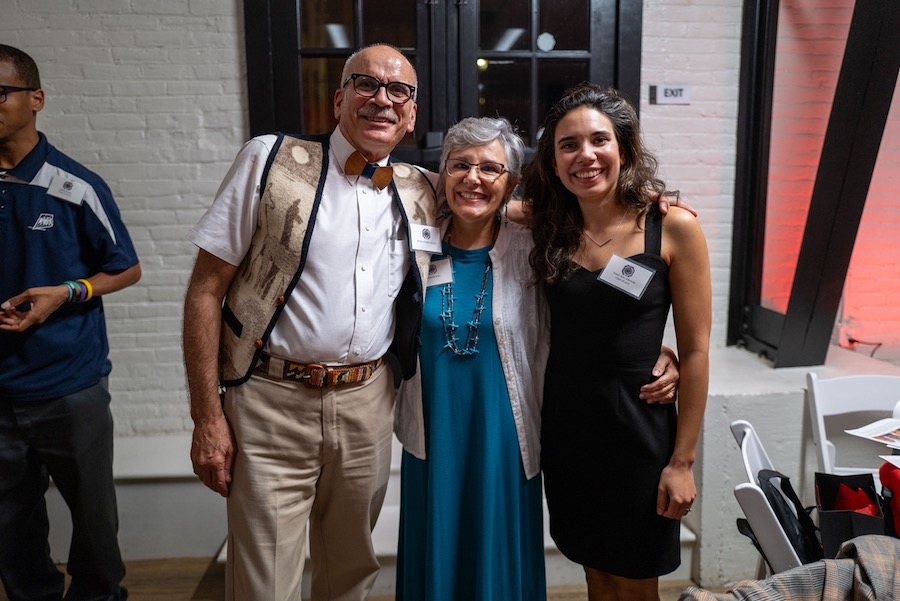
The McCaskey Distinguished Alumni Award, presented annually since 1995, recognizes five graduates who have achieved distinction in their fields and made significant contributions to their communities. This recognition from McCaskey — an institution that has shaped Lancaster’s leaders for over a century — represents not just personal achievement but the enduring power of public education to transform lives across generations. As part of the Award tradition, recipients return to McCaskey High School to meet with students before being honored at the evening banquet. Soto Albrecht delivered this speech at the Oct. 2, 2025 ceremony, receiving a standing ovation from the assembled alumni and community members.
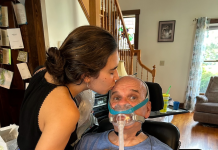
I’m wearing the same dress tonight that I wore two years ago, when I accompanied my dad to this very event. He helped to zip me up that night, joking that ALS hadn’t taken his finger strength yet. I’ll admit, it was a pretty difficult zipper.
Tonight, I zipped it myself. He’s been dead for a year.
On the heels of his rapid death from ALS, my dad and I both received distinguished alumni awards from our respective high schools. Brother Albrecht, for the lives he touched — the Lancaster community he held up, one person and one program at a time — through a teaching role made especially for him. Me, for my relentless pursuit of a cure for the disease that claimed his life and threatens my own.
Many of you taught alongside him, had your children mentored by him, or witnessed his joy throughout the hallways and streets of this city. You know the man that ALS stole from us. You heard him say, “I want to be part of the healing of the world.” Even as ALS stole his movement, he’d remind me, and anyone who would listen: “As long as you’re breathing, you can still make changes.” Well, I’m still breathing, Papi. And I’m making changes.
At the 2023 banquet two years ago today, we sat in these chairs. That evening, a teacher asked me about his limp. “He has ALS,” I said. “He isn’t going to get better.”
The next day, I accompanied him to the homecoming game. He insisted on hobbling up the bleachers to his favorite seat, with a great view and ample room for tossing his hat when McCaskey scored. As he’d done during every game for decades, he shouted with joy and launched his hat when the McCaskey Tornadoes scored a critical touchdown in the fourth quarter. I captured the moment on camera and turned away, sobbing, not wanting him to see my tears.
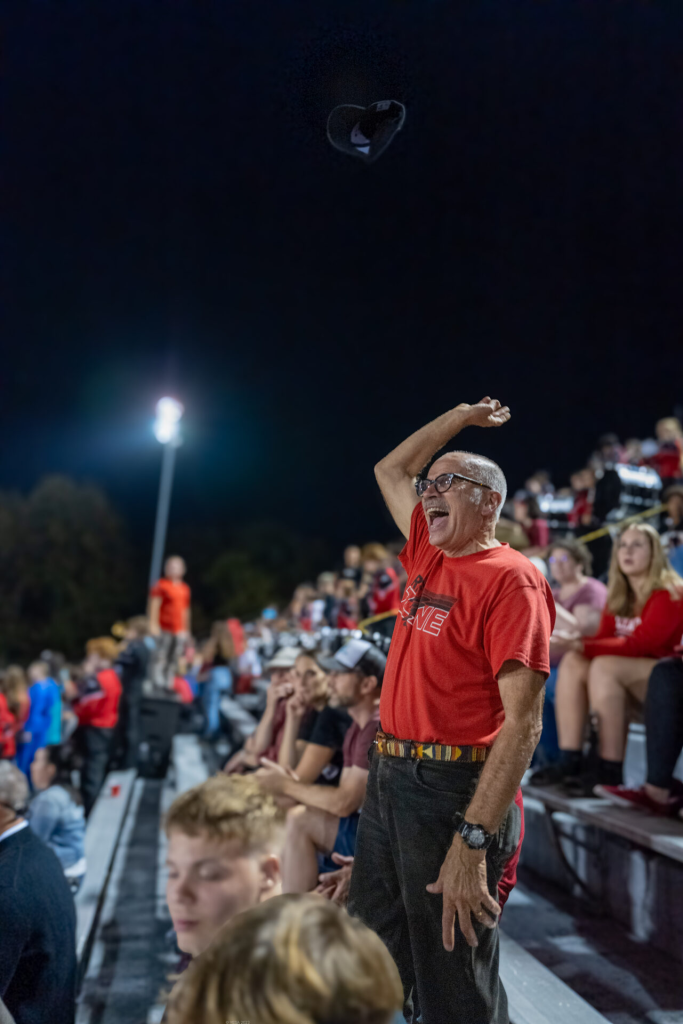
“What if this is the last time?” I whispered to the teacher next to me. Through tears of her own, she nodded; “I know.” That was indeed the last time I saw him do that.
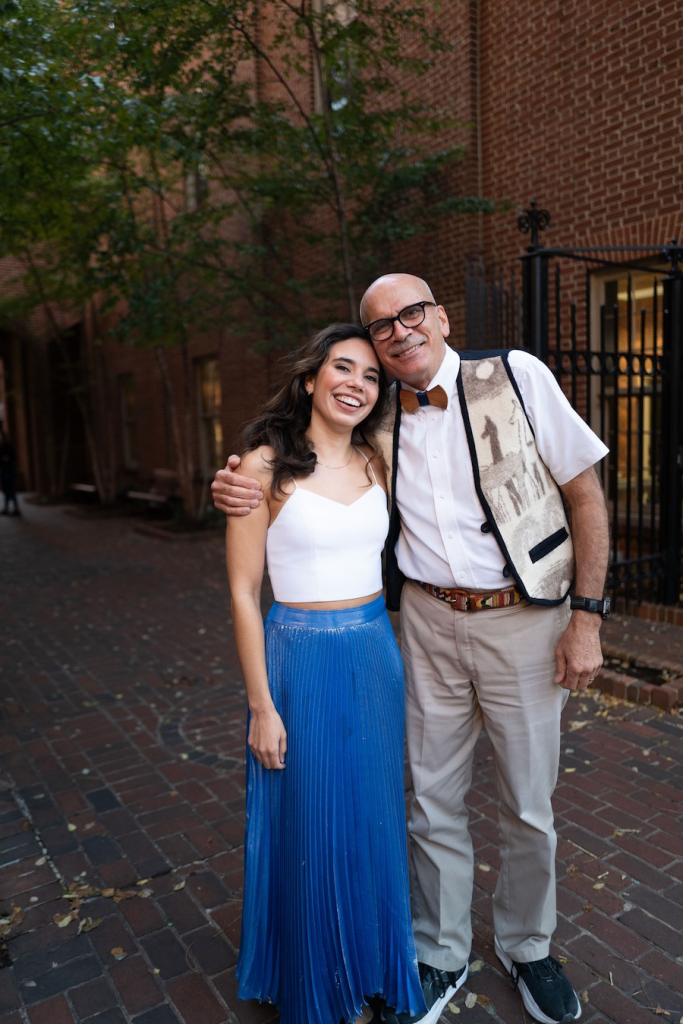
At the homecoming dance, he leaned on me as we walked the floor. He photographed his mediators for his wall, greeting hundreds of students he’d mentored. We danced our last dance as bright lights signaled the end. Black Eyed Peas’ “I Gotta Feeling” echoed throughout the emptying room as we sang of a hope that felt elusive.
The dress, the hat, the dance. I treasure these memories of when he looked and felt so alive. And yet ten months later, he was dead.
There is no cure for me yet. Two years ago, and just 3 weeks after these pictures, I learned that I had inherited the same gene from my dad that was painfully claiming his life. Fifty percent chance of ALS by 55, like my aunt. Ninety-five percent by 65, like my dad. At 32, I’ve likely lived over half my life already. These aren’t just statistics, they’re my deadlines. There’s no test to predict when I’ll get it. No lifestyle changes to improve my odds. No drug to prevent it. My C9orf72 genetic mutation was discovered in 2011, yet for what matters most to patients, we’re right back where we started.
Unless I cure myself, it will be my hands unable to zip this dress. My children’s games I’ll miss. My daughter or son I’ll never dance with as they’re married off.
In the hardest year of my life, I found myself uniquely positioned — one foot in research, one foot in medicine. There is no better person than a physician-scientist for curing incurable diseases, I told hundreds of students at McCaskey today. I could pursue my original dream of treating emerging infections while trying to outrun my genetic fate. Or I could turn these skills toward saving myself.
Six months after he died, I chose survival.
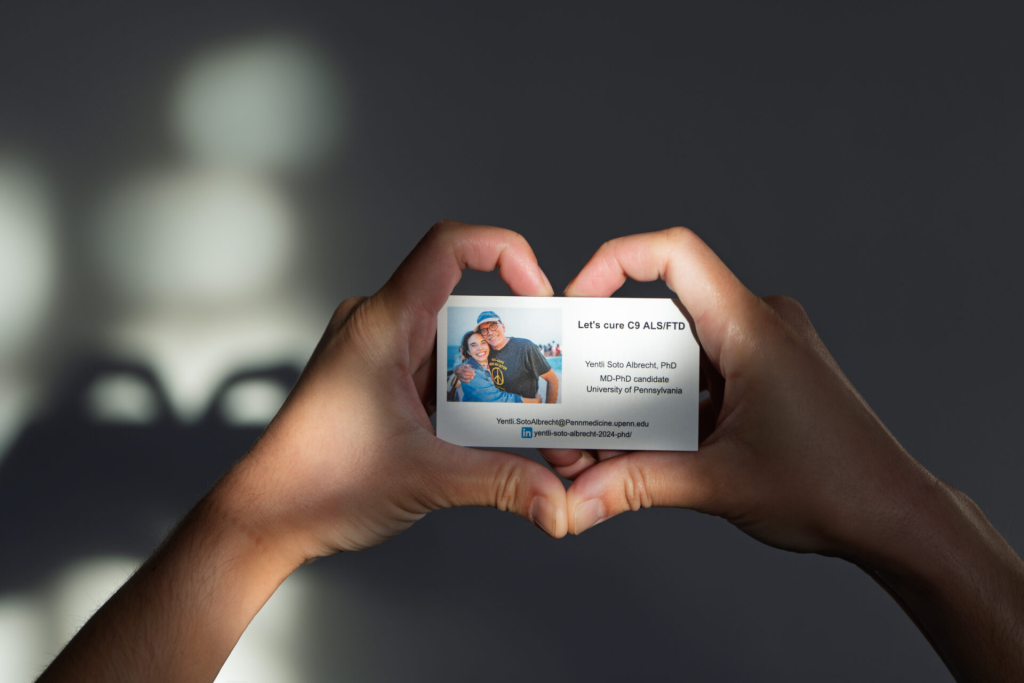
Between defending my PhD in October of 2024 and returning to medical school, I attended six neurodegeneration conferences in so many months. At each one, I handed out business cards with a picture of my dad and I embracing. “Will you help me cure myself?” I ask big-shot scientists in academia and industry, prominent CEOs of ALS organizations. Then the question evolved: “Will you help me survive?” Because survival means bringing others with me. Now I ask: “Will you help us change ALS?” And Papi, they’re saying yes. Because as long as we’re breathing, we can still make changes.
The momentum is real: I have collaborations across five countries, seven academic labs, and three companies. An invited pitch for an ALS biomarker platform for $150,000. Possibly three submissions to an international ALS prize. The first commercial biorepository for my genetic cause of ALS, where my dad’s cells and mine become tools for worldwide drug discovery. Even after we’re gone, our cells will keep fighting.
Success is binary — either I cure ALS and survive, or I don’t. And I’m not planning on losing. My hands auscultate and pipette with purpose, type proposals with urgency, and build collaborations across oceans.
But I recognize that I may need to set my sights on other victories along the way: helping genetic carriers navigate this landscape as their doctor, leveraging ALS breakthroughs for other neurological diseases, or shifting survival odds for future patients even if I can’t save myself.
McCaskey taught me to think critically, speak persuasively, and believe that a girl from Lancaster could change the world. The library where I studied, the mock trial team where I learned to argue, my dad’s peer mediation program where I learned to listen — they all prepared me for this fight. The bet is my life.
A dress, a hat, a dance. His yearning for life is my own, one I share with ALS patients who are losing the muscles that define living. I vow to leverage all that I have, all that I am, and all that I will be, to help them survive. To be a part of the healing of the world, as my dad was. His world, and mine. Just maybe, I’ll get to survive too.
Thank you for this Distinguished Alumni Award, McCaskey. Thank you for seeing both where I’ve been and where I’m going.
I can’t do this alone. It’ll take a community to turn ALS around. So, if you want to join the fight (holds up business card), let me know.
Have a great night.
A link to the delivered speech is available here: https://www.linkedin.com/feed/update/urn:li:activity:7379887177595359232/