All names changed for privacy.
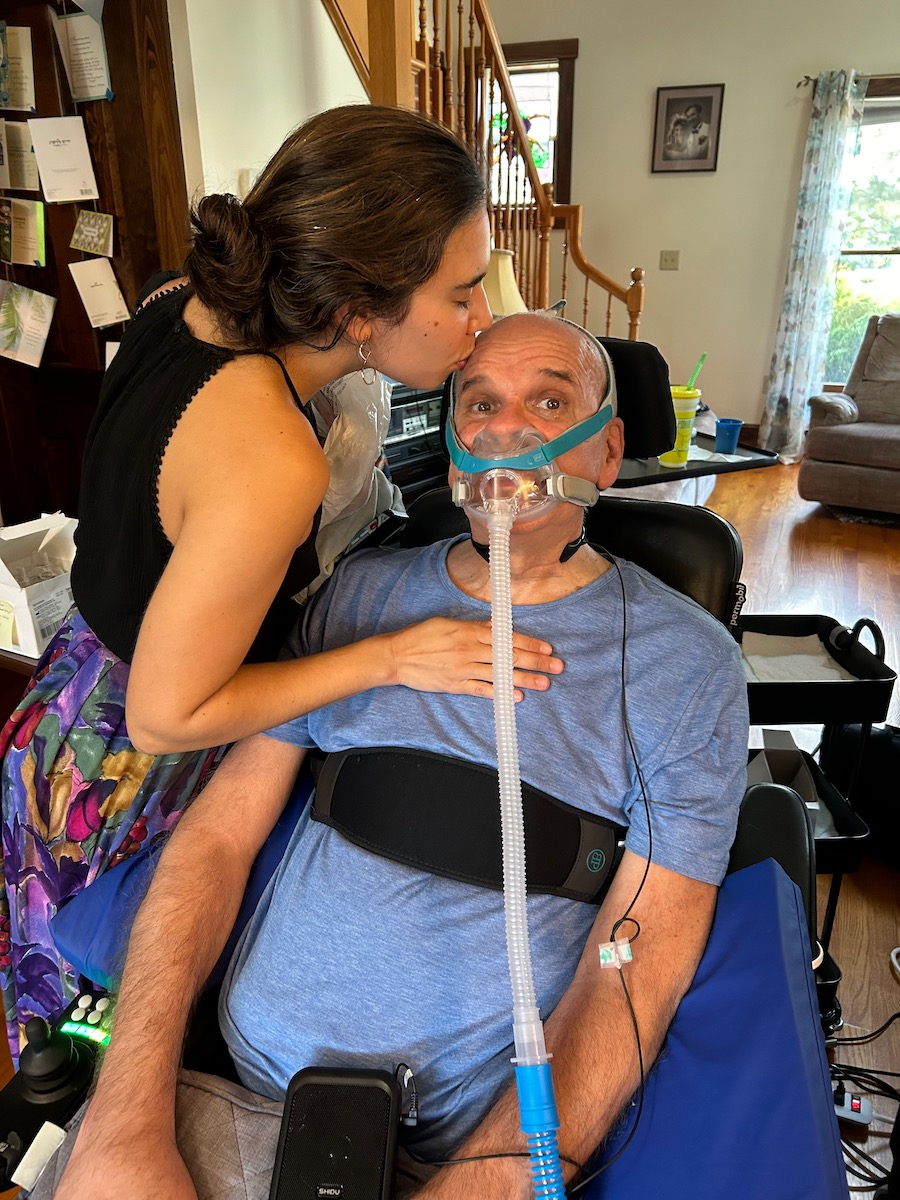
In March of 2024, my dad presented to the Emergency Department (ED) with shortness of breath. Unlike other patients in the waiting room, though, nothing could treat his condition. Courtesy of rapidly advancing ALS, his chest muscles were denervating, and his lungs were stiffening from disuse. Five months later, desperate for air, he died in my arms.
I returned to the ED not long after, this time as a post-PhD medical student. The contrast between my dad’s terminal presentation and the acutely sick patients we could heal was jarring at first. Over the course of this clerkship, I came to recognize three types of wounds: those that heal, those that won’t, and those that shouldn’t.
Mrs. Peterson was my first patient in five years. Elderly and delirious, she presented with a chest wound weeping serosanguinous discharge from a decades-old mastectomy. While I was new to her care, Mrs. Peterson was no stranger to the ED — her body had been unraveling in slow motion over several triage visits. Repeated incidences of GI bleeds, dropping hemoglobin levels, and tarry stools in the last year signaled impending disaster. While working her up for another GI bleed, we discovered a pulmonary embolism (PE) and started Eliquis. As with many ED patients, we couldn’t address her cumulative medical issues. Treating the PE with anticoagulant was like placing a band-aid. Once stabilized, she was discharged home.
A week later, Mrs. Peterson returned with profuse bleeding — the anticoagulant had caused her chest wound to hemorrhage. It was difficult for me to hold her head steady while the team placed a jugular venous catheter, as her cries of “You’re hurting me!” echoed off the ED walls and into my heart. We stopped the Eliquis and discharged her again, but three days later, she was back, now with ground-glass opacities clouding her lungs. With each visit, we solved the presenting problem; yet each solution incited the next crisis. Mrs. Peterson was suspended on the threshold between living and dying, unable to cross in either direction.
After starting antibiotics for her probable pneumonia, we called Plastics to the bedside for her chest wound. They discussed prep for yet another surgical intervention. Sensing her reluctance, someone finally asked, “Mrs. Peterson, is this what you want?” She paused, then answered one word at a time between rattling coughs, “No. More. Please.” Plastics dropped their note and left, probably questioning whether we’d meant to call Palliative instead. A ten-second conversation restored Mrs. Peterson with more agency than she’d had in months. She had decided her wounds shouldn’t be healed.
Then I met Mrs. Sullivan, another elderly woman presenting with a small bowel obstruction and suspicious pulmonary nodules. Having survived five cancers and multiple surgeries over forty years, she was tired of extreme interventions. She vomited through our first attempt to relieve the obstruction with a nasogastric tube. After racing across the ED for Ativan, I held her hand through the second try. As I cleaned her face afterward, she grabbed my wrist: “No more surgeries. You understand?” I understood. Mrs. Sullivan had claimed her narrative. She knew which wounds shouldn’t be healed.
Accepting when to step back from treatment doesn’t come easily. Our inclination as physicians-in-training is to troubleshoot, to problem-solve, to fix. My inclination as a loving daughter was the same.
ALS took my father from foot-drop to death in fourteen months, and he fought for every intervention and every possible cure with fierce determination. After he was immobile, his third ALS medication, Relyvrio, was pulled from shelves after a failed phase III trial overseas. He cried that day. Later, he decided to transfer to hospice care; my dad was adamant that if dying was the only option, he would die at home. When hospice required discontinuation of his two other ALS medications, he refused and instead paid out-of-pocket for them. Though he was unable to lift pills to his mouth and every swallow was a struggle, my dad insisted on taking medications with questionable efficacy. He wanted his wounds healed. The cruelty wasn’t that we did too much; it was that nothing we could do was enough.
Between Mrs. Peterson’s reluctant ED visits, Mrs. Sullivan’s firm boundaries, and my father’s desperate fight, I recognized the questions we rarely ask: What does healing mean to you? And when healing isn’t possible, what then?
Medicine failed these three patients in different ways. My father wanted to live with every fiber of his being, but his disease had no cure. Mrs. Sullivan found the treatment had become worse than the disease. Mrs. Peterson was caught somewhere in between, where each fixing led to a breaking, trapping her in a revolving door of triage visits.
As a genetic carrier for the same disease that killed my father, I, too, live in between. My likelihood of dying like my father is 95%, the scientific threshold for statistical certainty. My body is silent about when it will betray me, converting cell by cell from healthy to terminally diseased. While my wounds heal now, they won’t always. My acceptance of this comes from my contingency plan: For now, I live unburdened, leveraging everything I have to cure myself and others. If ALS wins, I’ll choose when to stop the healing.
My foray back into medicine has enlightened me. Sometimes the most profound medical education happens in recognizing which wounds we’re facing and having the wisdom to respond accordingly. Sometimes the real emergency isn’t the wound that presents to triage — it’s the conversation we’re not having.