Art by Mimi Kim, MS4
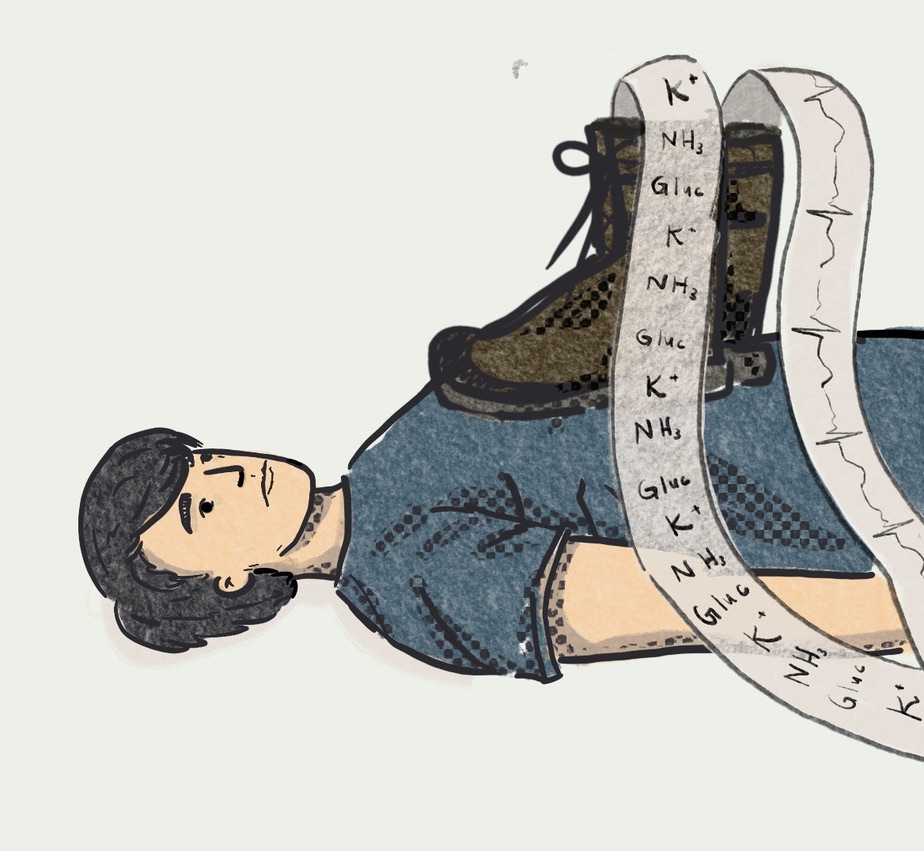
Boots on my chest,
Sodium, glucose, potassium, ammonia,
Pressing me down.
In medicine’s eyes
these are all the components
Of a human body.
There is no room for the deterioration
I see.
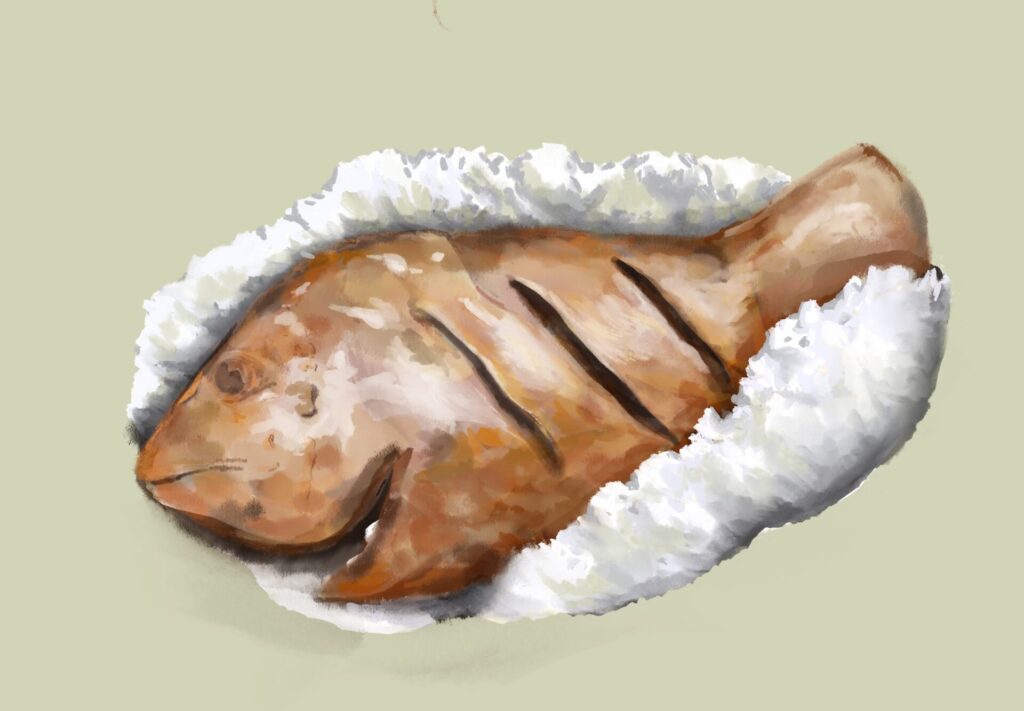
Red snapper. Fried. Nestled in a giant bed of rice.
Reheated repeatedly at her request, nurses knowing it will remain
uneaten.
The smell billows out of her room when the door opens.
Brown sugar crystals, clinging to her hospital gown.
Greek yogurt slipping from her spoon, last bites creating
a minefield of stickiness,
washing off my hands and stethoscope
each morning.
I stand before her door.
Apprehension and pained smiles shared
with the nurses I’ve befriended while we care for her.
Knock. “Good morning A!”
What is her mood today?
A monthlong tete-a-tete.
Increasingly strident requests to decline treatment.
Family meetings with anger in her eyes and a refusal to speak.
She insists she does not want to give up, she’s a fighter.
Her actions and decisions say differently.
The pervasive feeling that we are getting nowhere.
Dialysis — lifesaving treatment for her failed kidneys.
An exhausting uncomfortable experience for her body.
Each morning a new lab value threatens her life:
hyperkalemia, hyperammonemia, hypoglycemia.
Daily EKGs watched like hawks,
delaying as long as she keeps the leads on.
Two
Three
Four days pass. Hyperkalemia.
I kneel by the side of her bed.
Today, she really needs to go
to dialysis.
Instantly, her mood changes.
Joking laughter, indignation.
We review her trends, dialysis on Monday,
potassium climbing ever since,
nowhere to go with failed kidneys.
I visit dialysis at her request.
Life, vibrant and crimson
flowing from two catheters in her neck
through precariously perched tubes
into a white machine.
Giant clamps, clear tubing
emerges from every opening while she sleeps.
Facial twitches, quick wrist flaps,
a terrifyingly drowsy sleepy gaze.
We are reminded daily patients do not read our textbooks.
Medical students must remain constantly vigilant, creative,
discouraged to anchor or discard any one diagnosis.
In this, she had read the textbook.
Trying to call a relative on her phone,
thwarted by repeated wrist jerks.
I tell her she looks bad today.
She’s incredulous, we create problems for her so she never leaves.
She is too drowsy to respond.
We take her emergently to dialysis.
She does not remember this conversation the next day.
Hyperammonemia.
Antibiotic infusions completed.
Right lung overtaken by empyema, stable.
A tenuous truce for the dialysis schedule.
On the road home, home is close.
It happens on morning rounds.
Get the nurse! Call my senior!
Where is my attending?
Call her wife.
Unresponsive.
Hypoglycemia.
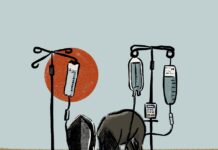
D20 drip hangs, a steady feed of glucose.
Drop by drop by drop.
Her blood sugar doesn’t look good, her sense for low sugar is lost.
Veins can’t handle this concentration of sugar water.
How do we wean this off?
She’s stuck again.
“I want to go HOME!”
She told me I was her reassurance.
Am I in over my head. Can I, am I, being objective.
Providing the best care possible within my experience.
She was the difficult patient when I first came on service.
Such a fraught set of words. “Difficult patient.”
Difficulty being patient.
What is a hospitalization
but the difficulties of being a patient.
Greek yogurt with brown sugar
is all she eats. Sometimes fish.
I know her wife’s name.
I know her favorite color.
I know the smell of her body rotting.
I know every lab, imaging finding, and order.
How little it takes to compose a person when in medicine’s cradle.