Art by Caroline O’Rourke, MS2
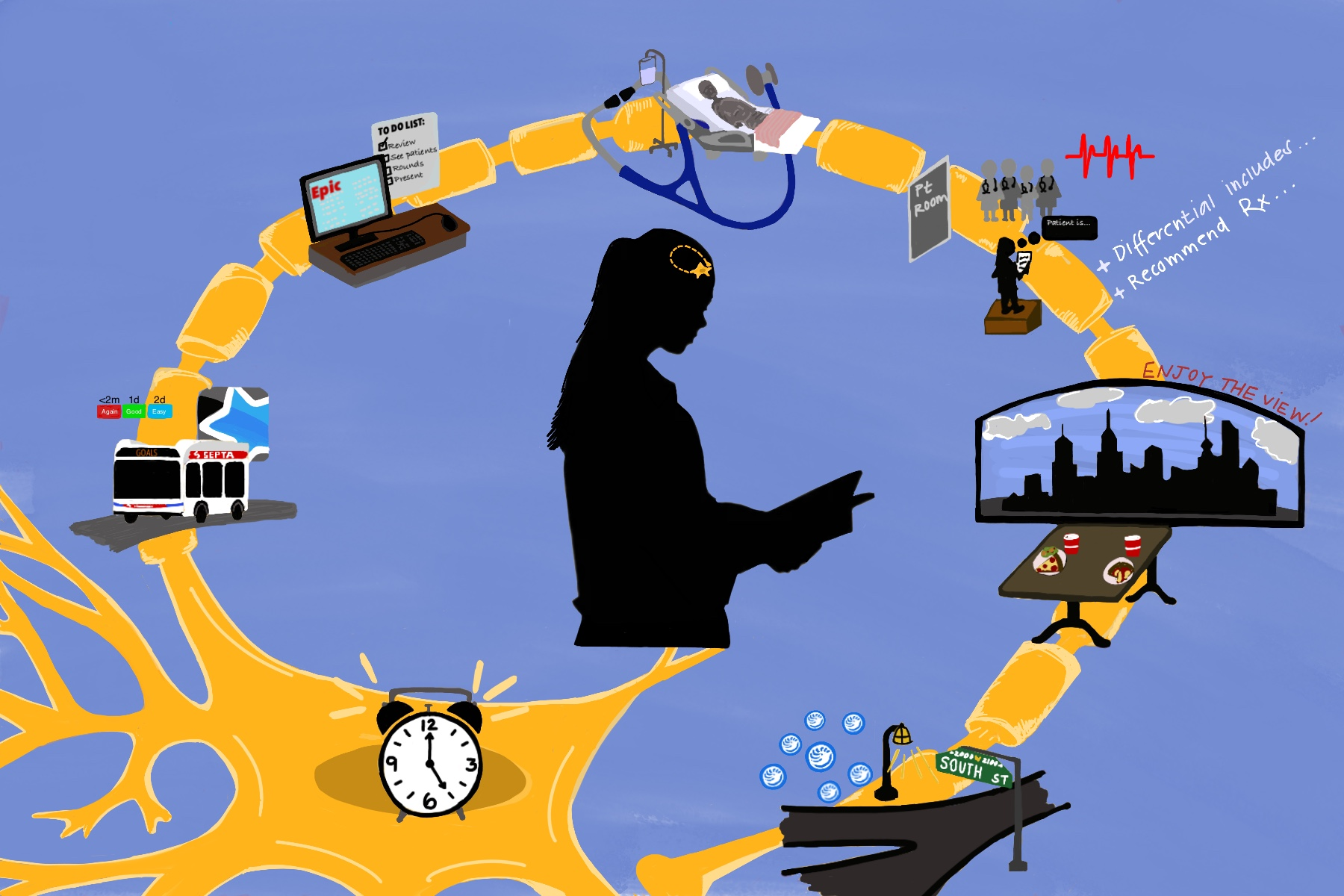
Make sure you set an alarm before you sleep. In fact, set multiple alarms because you can never be too sure of waking up and actually getting out of bed by 6 am. Your phone shrills. Eat a big breakfast with protein. Brush your teeth and your hair and then get yourself out the door. On the way to the hospital, make sure you remember what your goals are for the day. Then try to do Anki cards for the rest of the bus ride. Don’t just click through the cards, but pause – actually think. When you get to the workroom, remember to say hi to everyone and find a seat that is out of everyone’s way. Check in with the intern to see if anything’s changed since yesterday. Go do your pre-rounding chart review. Remind yourself that no matter how good the chart review is, seeing the patient is even more essential. Find the patient’s room and walk there. Double-check it’s the right room. Remind yourself of the key questions you must ask them. Think, what does your attending need to know about this person today? Think, what does the team need to know as barriers to discharge? Knock on the door. Greet the patient. Ask them those questions. Keep an eye on the time. Ask to do the physical exam. Start with the heart. Close your eyes and really try to imagine what you are hearing. Lub, dub, any murmurs? Any rubs? Any weird sounds? Ask the patient to take a deep breath. In and out. Listen to their lungs in all the fields. Remind yourself and them that you are still learning, and then go back to take a second listen if necessary. Then ask them to turn their head to the left. Take a look at their neck and try to see the IJ. If not, try to see the EJ. Turn on a flashlight if needed, but chances are you still are unsure of what you are seeing. The elusive JVD. Then press on their belly and assess pain. Never forget the legs. Press down on the shins and look closely for any pitting edema. Then ask the patient if they have any questions you can answer or relay to the team. Keep an eye on the time. After listening, tell the patient the team will be by later. Leave the room and then remember to find the telemetry monitor. Click through the rhythm strips and see if anything notable happened. Then try to track down the nurse and ask them for updates. After all this, repeat again for the next patient. When you are done, make sure you have enough time for the elevators to get you back to the workroom and meet the team for rounds. If possible, use the bathroom. You never know how long rounds will be, so prepare in advance. On rounds, patiently pay attention to everyone’s presentation. Follow along. Use OpenEvidence if you have any questions. Save long questions for afterwards in the workroom. Remain calm and then think about what you are going to say about your patient. What is the beginning, middle, and end of their story? When it’s time for you to present, remember you can do it! When presenting, look around at the team. Make eye contact. Read the room, stop, and adjust if needed. Don’t forget to pull up the imaging, EKG, etc. Always mention Is/Os, diuresis, and kidney function. Then jump into your assessment and plan. Your thoughts matter. Remind yourself not to ramble. It must be concise. It must be coherent. It must make sense for everyone to hear. When this performance is all done, take note of the tasks for the day. See the patients as a team, and explain to them what was decided on as the plan. When rounds are over, the pressure is off and the organic learning environment emerges. Ask all the questions you wondered about to the intern or senior resident. Go to the resident lunch conference and look at the beautiful view of Philly outside the window. Eat the usual lovely Pattaya, New Delhi, or Zestos. Then, do the POCUS, check the literature, and ask the extra questions for your patient that you wondered about. Read UpToDate. Share your newfound knowledge with the team with that chalk talk, and then be prepared to answer their questions. When 5 pm comes along, you will have realized you learned a lot and the hours flew by. Walk home. Eat a snack and then do as many UWorld questions as you can. Eat dinner. You always have a higher expectation of how much UWorld you can do. You almost never meet your expectations. It’s okay, because there’s always tomorrow. Go to bed, and make sure to set those alarms.