Art by Mimi Kim, MS4
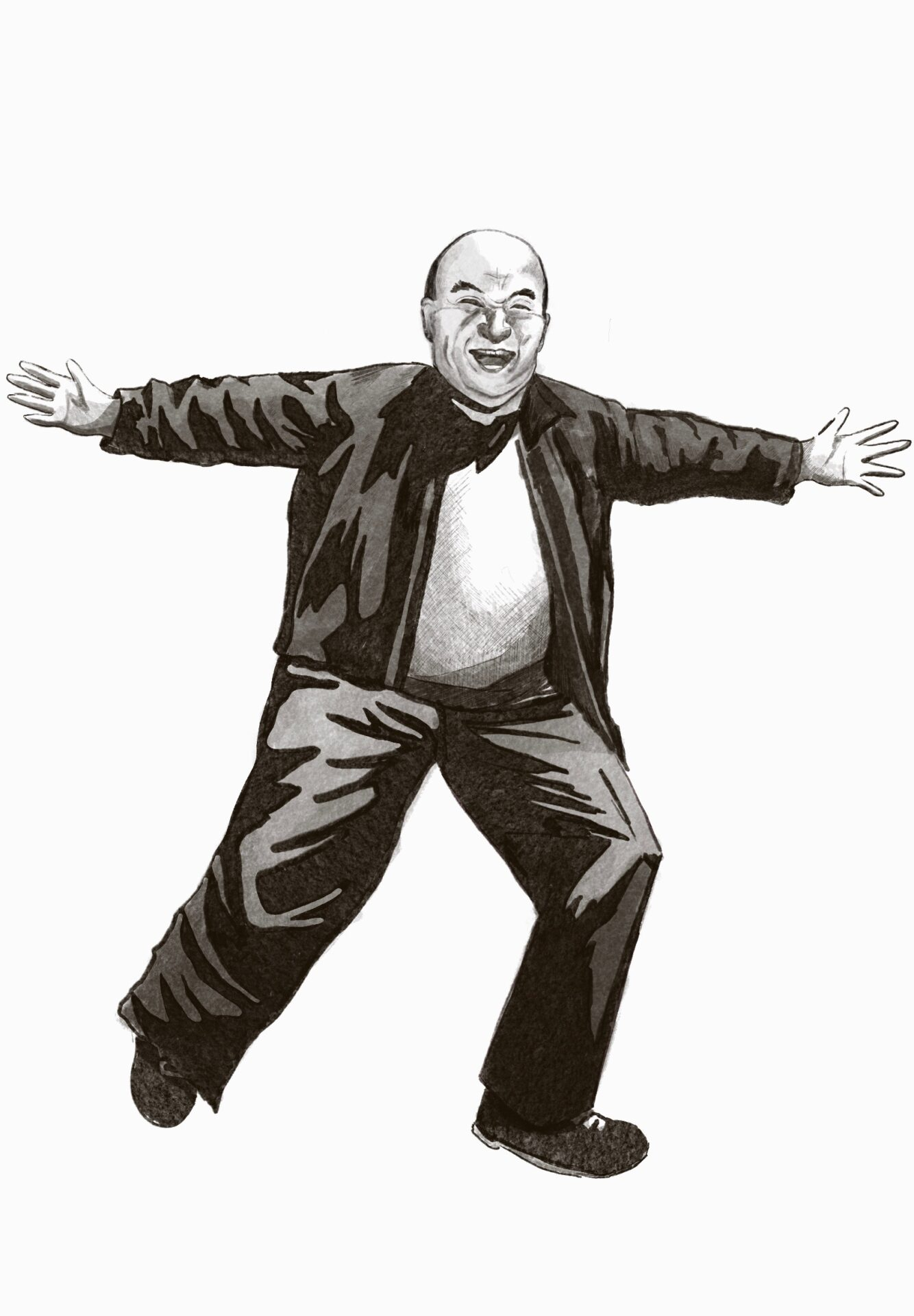
“He got up, did a little jig, and then it was over.”
Whenever I hear this story of the preceding moments of my grandfather’s death, I can’t help but let out a chuckle. I picture him getting out of bed, kissing his wife of over 50 years, attempting some dance he picked up on one of his trips to Ireland, then collapsing to the floor. All with an unwavering smile across his face.
Fast forward seven years to my medical school orientation. A week designed to bring 150 students from diverse backgrounds a few steps closer together. It was filled with everything you would expect: matching T-shirts, corny name games, and more ice breakers than one could stomach. In one of the ice breakers, one I’m guessing we’ve all played, I was asked, “If you could have dinner with one person, dead or alive, who would it be?”
Over the years, I’d answered this question a dozen different ways: Abraham Lincoln, Babe Ruth, Anthony Bourdain. This time though, I wanted to answer honestly. After a brief pause, it slipped from my tongue like dress shoes on ice – “Bumpa.”
Bumpa was my grandfather. That wasn’t his real name though – family lore traces it back to my oldest brother’s toddler-era mispronunciation of “grandpa.” In classic midwestern nice fashion, no one had the heart to correct him, and it stuck.
Growing up, I didn’t really know what Bumpa did. I knew he spent most of his time building a log cabin in the sticks of Wisconsin – a small plot of land that I would join him on to fish while he got to work. I knew when he wasn’t at “the land,” you could find him in the back room of his house playing online solitaire or at the dinner table always asking if someone could pass the salt. I knew that he spent his life “helping others,” but beyond that I had no idea.
It wasn’t until October of 2017, when I officially lost the chance to ask him myself, that I began to discover who Bumpa really was. Only then did I begin to piece together the legacy he left – not just as my grandfather, but as a healer and a physician.
At his funeral that October, I listened as family, friends, and strangers stood to share their memories of my grandfather. What emerged was an increasingly clear portrait of a man known for his deep compassion, intellectual curiosity, and truly terrible jokes. One beautifully written comment left on his obituary page has stuck with me.
“I will always remember him for his character, his thoughtfulness of others, his bad puns for sure! and most of all for the way he always put his patients first. Whenever I am asked who exemplifies what a provider should be like, Dr. Ryan is my example. He will forever be missed.”
In the days that followed, I started listening more carefully. Informally, I began collecting whatever stories surfaced – memories from relatives, notes on his obituary page, anything I could find. It was humbling.
Bumpa did many things during his medical career. He served in the U.S. Army medical corps, became the first medical oncologist in Appleton, Wisconsin, and was the first person there to administer chemotherapy. He then spent the final years of his career delivering primary care to the rural population of Wautoma, Wisconsin – years that he once remarked as the most meaningful of his life. From what I can gather, Bumpa never saw medicine as a job – it was a calling. For him, living a life in service to his patients, surrounded by loving family and friends, was everything he needed for a life well lived.
Now in medical school myself, I find myself chasing his ghost. Surrounded by extraordinary classmates – many of whom dream of curing cancer or leading the newest wave of biotech innovation – I sometimes feel unmoored by my own quiet desire: simply to be a present physician. To listen well, to show up, and to walk with patients through their hardest moments. Not because I am anyone extraordinary, but because I believe that simple presence can sometimes be the best medicine.
Even this early in my medical training, it’s easy to feel the allure and institutional push towards achievement: the publications, the leadership roles, the ever-growing CV. But when I sense that strain, I think of Bumpa. To me, he represented the real heart of medicine – not the fame, not the prestige, but the quiet unglamorous moments: sitting with people in pain, offering what presence we can. Acknowledging our limits. Showing up anyway – imperfect, but ready to serve.
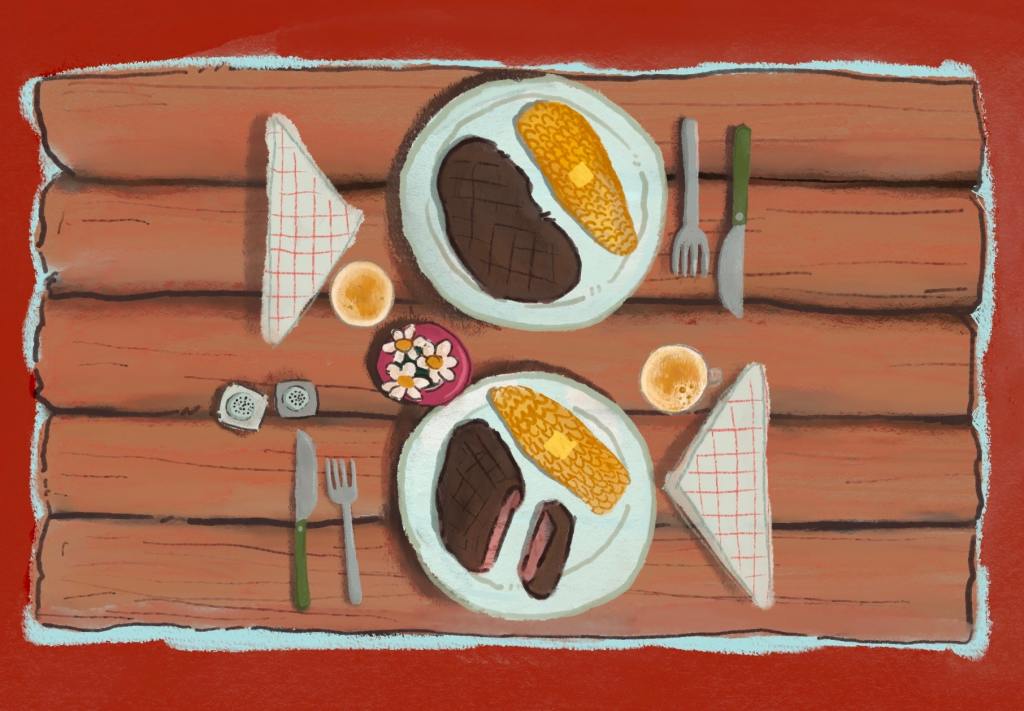
When I imagine having that dinner with him, it’s nothing fancy. An early August evening, just the two of us sitting on the porch of his home in Waupaca, Wisconsin – a steak from the local butcher, corn on the cob with butter and extra salt, and an ice-cold Spotted Cow. I ask him how he did it – how he led a life so aligned with his personal philosophy of service and love. I ask him what medicine meant to him and why he chose his path. Finally, I ask him how I should approach my own life as a physician.
When I imagine his response, I don’t imagine a drawn-out monologue. I simply imagine him sitting back, that goofy smile taking over his face, saying, “Do what you can. Be kind. Be present. Lead with your heart.”
Sitting here today, staring down the barrel of a career in medicine, I wish I could have that dinner. I wish I could ask him all my questions, see the passion in his eyes, and, if I was lucky, be blessed with one last awful joke. For now, though, that imagined evening – simple and slow – will have to suffice.
Finally, as I reflect on how to live my own life to the fullest, I am so grateful to have Bumpa as my north star – not because he was the most successful or the most talented, but because he lived with quiet strength. He loved freely, laughed often, and led with his heart. And that final jig? I used to think it was just a quirk of timing, a light-hearted ending for a man who lived a beautiful life. Now though, I wonder if there was something more. A parting gesture, or a wordless reminder that life, even at the end, is worth dancing through.
Ultimately, when my time comes, I hope to go like he did – a kiss for the person I love and one last poorly choreographed jig.